
The Blue Snowsuit Interview #01: Jaime Lynn Hendricks
A conversation with Jaime Lynn Hendricks

Jaime Lynn Hendricks
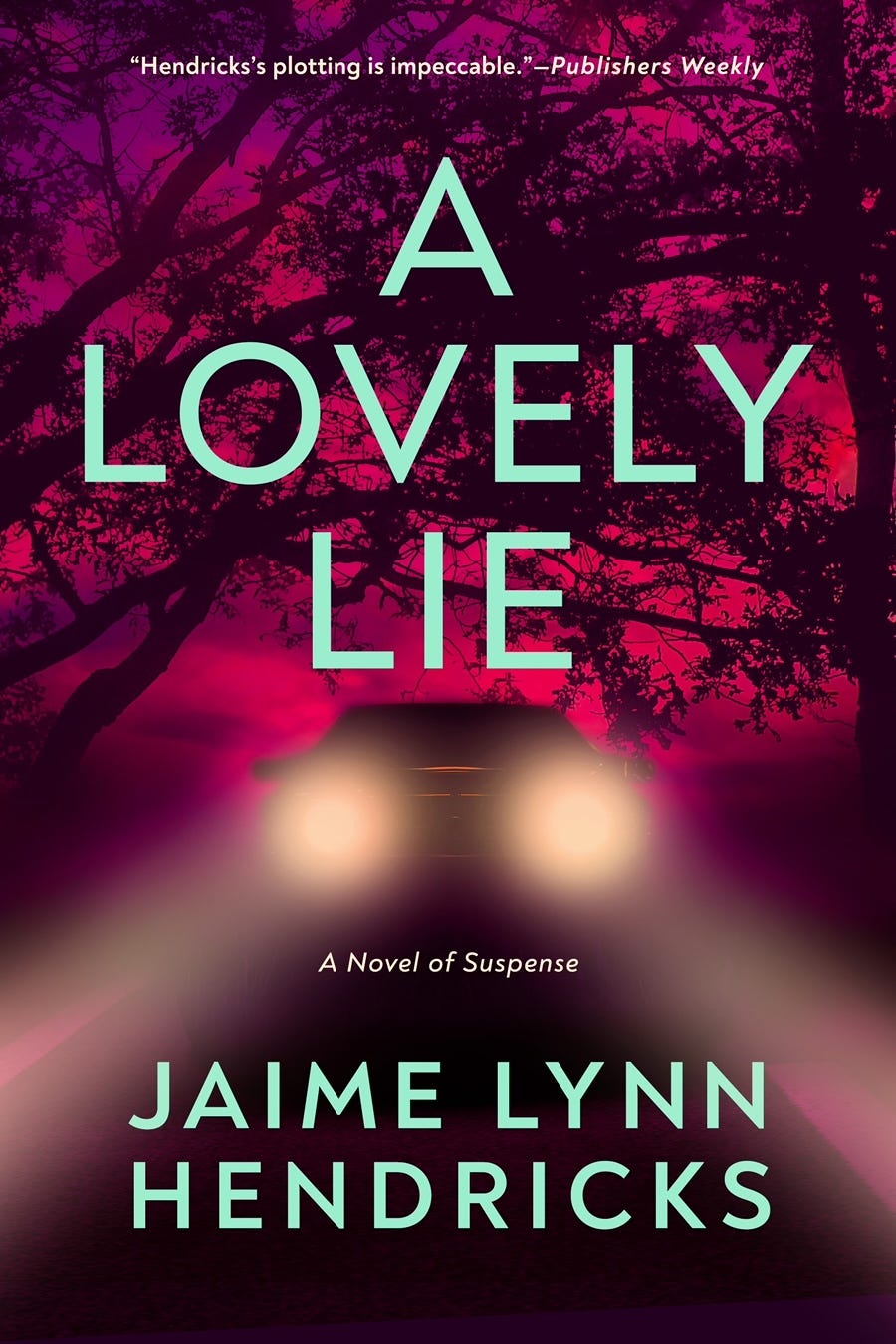
Jaime Lynn Hendricks, bestselling thriller author of A Lovely lie, joins The Blue Snowsuit Literary Series for an in-depth author interview that dives deep into the private pressures and psychological challenges behind writing gripping psychological thrillers.
In this conversation, the acclaimed psychological thriller author reflects on creative resistance, vulnerability in storytelling, and how she sustains raw emotional tension long after the final page.
Interview
1. What pressure were you under when this writing was done, not externally, but privately?
None, really. This was actually my 4th completed manuscript, but I queried it under a different title and never got an agent for it, so it went in the metaphorical drawer. I got an agent on my 5th MS, the one right after this one, and I was writing so many books so fast…but I LOVED the secret in this one surrounding the car accident. After 3 traditionally published books, I went back to this one. I looked at it with new eyes and realized what wasn’t working the first time around, so I totally rewrote it. The only thing I kept was the situation surrounding the accident. Literally EVERYTHING else was different … the POVs used, their names, their jobs… total rewrite! My publisher loved it, we renamed it, and it got what it still to date my favorite cover.
2. What did you have to protect in order to finish this piece? (time, secrecy, sanity, relationships, belief)
Definitely my sanity! For a total rewrite, I still had in the back of my head how it was “supposed to be” so getting past all of that was difficult at first.
3. Where did the writing resist you the most, and what did that resistance teach you?
As said above, the resistance came from what the original version was. I kept saying “wait but…!” until I trained myself to understand this was an entirely new manuscript. My writing was definitely better by the time I came back to it, so “killing the darlings” really applied here. I learned that it’s OK to trash entire chunks of something I previously adored—I’m talking 30-40k words, gone, in two separate spots. I kept thinking they were needed, but they only worked with the original version.
4. What question does this book keep asking you, even now?
Did I do the right thing by letting one person “get off” without jail time? I don’t want to give anything away, but while it seems this person didn’t have to pay for what they did, they most certainly paid in their personal life.
5. What part of yourself did you not intend to reveal, but the writing forced it into the open anyway?
There’s a split timeline… now and 1999. I don’t have kids, and the main character in the “now” has a teenage son. I had to ask some friends if the behavior was in line with how teenagers act nowadays. I don’t like to rely on social media to see stuff like that because so much is posturing. I hope it came across authentic, otherwise I outed myself as someone who should never write about teenagers

This was my only book with a teenager prominently in the story. I think I did okay with the flashback part when the main characters were in high school. It wasn’t so far off my own senior year, so I understood their behavior more (i.e. no social media and no texting).
6. Who do you think misunderstands this book the most, and why?
That’s a difficult question. It’s a thriller, so most thrillers rely on the fantastical. Someone who takes things TOO literally might not be the right audience for this book (“But that can never happen!”). It’s not like I wrote about a barista who was forced to do an emergency appendectomy
Thrillers are supposed to be an escape, with crazy things happening to real people. I don’t think most things that I read in thrillers will happen to the average person, but that’s the fun of them!
7. What would you lose if readers stopped reading you tomorrow, and what would you gain?
Obviously, I’d lose sales, but what I’d miss the most is the thriller bookstagram community. I’ve developed some real friendships over the years but most of them are reading only targeted thrillers. What I’d gain…probably a new craft. I wouldn’t stop writing, but I’d have to write for a new audience, so I’d have to learn how to put together a women’s fiction novel—the expectations for readers in other genres is always different. And the craft of the book changes too, with Acts I, II, and III needing an entirely new way of writing (no twists, no cliffhangers- what?! Ha)
8. Do you trust your readers to sit with discomfort, or do you feel pressure to resolve things for them?
If I wrote a different genre, like romance for example, the readers expect everything to be resolved with a big bright now and a happily ever after. I write about murder, secrets, and lies, so I’m comfortable leaving them uncomfortable!
9. What do you hope readers feel after the final page, not immediately, but days later?
I hope they love the twist and they’re still thinking about it! As previously stated, I kept the entire secret about the accident the same from the first version. BUT. I added something new at the end of that part and actually ended up changing the final killer. I think it worked a lot better. Basically, after it’s resolved and you know what happened that night, stay tuned, because there’s one more final twist!
Jaime Lynn Hendricks is a bestselling thriller author with her works featured in the New York Times and People magazine, and they have been translated into six foreign markets.
If this conversation resonated with you, consider subscribing to The Blue Snowsuit.
Each feature is part of a growing literary archive exploring psychological tension, creative discipline, and the interior forces shaping contemporary storytelling.
A project of Redtail Turtle Publishing